
HR 2.0
-
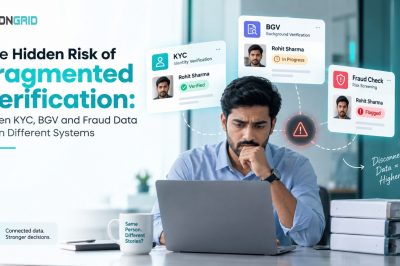
The Hidden Risk of Fragmented Verification in Modern BGV
A candidate clears identity verification. Their education check comes back separately. Employment records are verified through another workflow, while court-record or fraud-related checks may sit in a different system. For an HR team managing hundreds or thousands of hires, this may look like a normal background verification process. But there is a problem: the information…
-

Why Businesses Are Moving From Verification Tools to Verification Infrastructure
For a long time, verification was treated as a point solution. A company needed to verify an employee, so it bought a background verification tool. A fintech needed to verify a customer, so it integrated a KYC API. A lender needed an address check, so it added another verification provider. Each tool solved a specific…
-

ATS vs Traditional Recruitment: What Modern Businesses Need
There was a time when hiring five people in a month felt like a busy month for an HR team. A recruiter would post a job, collect resumes in an inbox, shortlist candidates, schedule interviews, and maintain a spreadsheet to track everything. It worked. Until the company started hiring 50 people. Then 200. Then multiple…
-

BGV Documents: Complete List & Requirements for Employee Background Verification
When an employee background verification process gets delayed, the reason is often surprisingly simple. The candidate has not submitted the right document. A degree certificate is missing. An experience letter has an incorrect date. The address proof does not match the current address. A PAN card is submitted instead of an identity document required for…
-

HR Compliance Checklist for Employee Background Verification in India
Hiring the right person is not just about evaluating skills, experience, and cultural fit. For organisations operating in India, especially those handling sensitive customer data, financial transactions, or regulated operations, employee background verification is an important part of building a compliant and trustworthy workforce. However, background verification is not simply a process of collecting documents…
-
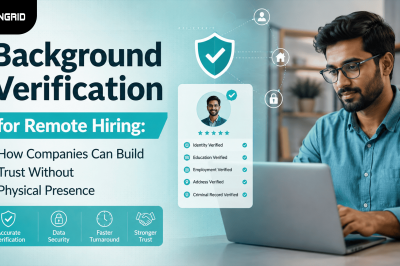
Background Verification for Remote Hiring: How Companies Can Build Trust Without Physical Presence
At 10:15 on a Monday morning, a new employee logs into their first team meeting. The HR team has completed the onboarding formalities. The manager introduces them to the team. IT has shipped the laptop. Their email account is active. They are officially part of the organisation. There is just one difference from the traditional…
-
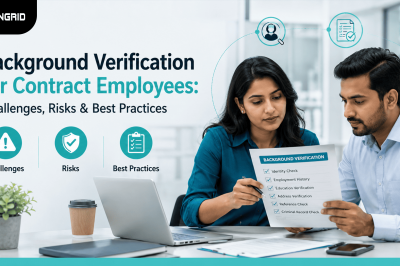
Background Verification for Contract Employees: Challenges, Risks & Best Practices
Contract employees are now an important part of the workforce for many organisations in India. From logistics and delivery operations to manufacturing, facility management, IT services and customer support, enterprises increasingly rely on contract workers to scale teams quickly and manage fluctuating workforce requirements. But faster hiring can also introduce additional risk. A contract employee…
-

13 Hiring Risk Questions Every CHRO Should Ask Before Making an Offer
Hiring decisions have always carried a certain level of uncertainty. However, with remote hiring, digital resumes, distributed teams, and rising compliance expectations, the risks associated with hiring have become more complex than ever. For CHROs, hiring is no longer only about finding the right skills at the right time. Every hiring decision impacts business continuity,…
-

The New Playbook for Hiring in the AI Era
Hiring has always been a balance between speed and certainty. Every organisation wants to hire exceptional talent quickly. But every hiring decision also carries risk — a candidate with inaccurate credentials, inflated experience, undisclosed employment history, or misrepresented skills can impact productivity, culture, compliance, and business outcomes. For years, hiring teams have tried to solve…
-

5 Background Verification KPIs Every HR Team Should Track
Hiring today is measured in speed, but successful hiring is measured in outcomes. An organisation may reduce its time-to-hire by 30%, yet still experience high early attrition, delayed onboarding, or compliance issues because the quality of its background verification (BGV) process isn’t being measured effectively. Many HR teams monitor how many background checks are completed…
Recent Posts
- Employee Screening Checklist for NBFCs, Fintechs and Banks

- Fake Salary Slips and Form 16: How to Verify Salary Documents in India

- Driving Licence Verification for Fleet Hiring

- Background Verification for Freshers: What Can You Verify When There’s No Work History

- Background Verification for Healthcare Hiring: 7 Checks That Go Beyond Certificates

Categories
- Accountability 3
- Address verification 4
- Background verification 127
- BFSI 3
- Case Study 5
- Criminal Verification 19
- Drug test 2
- Due Diligence 34
- Education Verification 11
- eLockr 9
- Employment Verification 32
- Gridlines 4
- HR 2.0 64
- Identity Verification 36
- Industry 4.0 27
- OnGrid 74
- Uncategorized 6
Tags
#AadhaarVerification #BackgroundChecks #Background Verification #BGV #LocalAddressVerification #PoliceVerification #Trust Background check Background Verification background verification process in india bgv BGV in India business due diligence Compliance credit check Digital Identity Digital Onboarding Employee Screening Fraud Prevention Gig Economy hiring compliance HR 2.0 HR Best Practices HR Tech identity verification OnGrid physical due diligence Remote Onboarding vendor due diligence Verification