



-

9 Ways to Improve Hiring Quality Through Verification
Hiring the right people has never been more challenging. While resumes, interviews, and skill assessments help evaluate a candidate’s capabilities, they don’t always provide complete confidence in the hiring decision. Inaccurate employment details, unverifiable qualifications, identity fraud, or omitted information can lead to poor hiring outcomes that impact productivity, workplace culture, compliance, and business performance.…
-
Difference Between Identity Verification and Background Verification
Trust is the foundation of every hiring decision. But in today’s digital-first hiring environment, trust alone isn’t enough. Recruiters are increasingly hiring candidates they’ve never met in person. Businesses are onboarding gig workers across cities, engaging remote employees, verifying contractors, and partnering with vendors through entirely digital workflows. While technology has made hiring faster, it…
-
How to Reduce Time-to-Hire Without Increasing Hiring Risk
Every vacant role comes with a cost. Projects slow down. Existing employees become overloaded. Customer commitments get delayed. Revenue opportunities are missed. That’s why HR teams today are under constant pressure to reduce hiring timelines. But speed comes with its own challenge. The faster you hire, the greater the possibility of overlooking critical information about…
-
The New Playbook for Hiring in the AI Era
Hiring has always been a balance between speed and certainty. Every organisation wants to hire exceptional talent quickly. But every hiring decision also carries risk — a candidate with inaccurate credentials, inflated experience, undisclosed employment history, or misrepresented skills can impact productivity, culture, compliance, and business outcomes. For years, hiring teams have tried to solve…
-
5 Background Verification KPIs Every HR Team Should Track
Hiring today is measured in speed, but successful hiring is measured in outcomes. An organisation may reduce its time-to-hire by 30%, yet still experience high early attrition, delayed onboarding, or compliance issues because the quality of its background verification (BGV) process isn’t being measured effectively. Many HR teams monitor how many background checks are completed…
-
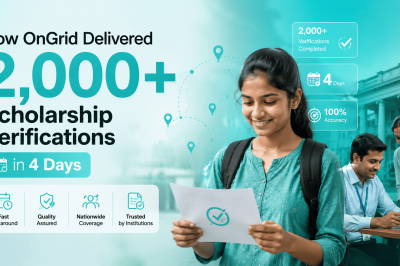
How OnGrid Delivered 2,000+ Scholarship Verifications in 4 Days
Corporate Social Responsibility (CSR) scholarship programmes are designed to create opportunities for deserving students. But before financial assistance reaches the right beneficiary, one critical step determines the programme’s success—student verification. For scholarship administrators, balancing speed, accuracy, and scale is often easier said than done. Verifications must be completed within tight timelines, beneficiaries are spread across…
-
AI Can Write the Resume. Can It Fake the Employee?
Artificial intelligence has quietly become part of almost every hiring journey. Candidates use AI to improve resumes, draft cover letters, prepare for interviews, and even optimise their LinkedIn profiles. Recruiters, on the other hand, rely on AI to source talent, screen applications, and automate repetitive hiring tasks. Used responsibly, these tools make recruitment faster and…
-
8 Hiring Fraud Trends Every HR Leader Should Watch in 2026
-
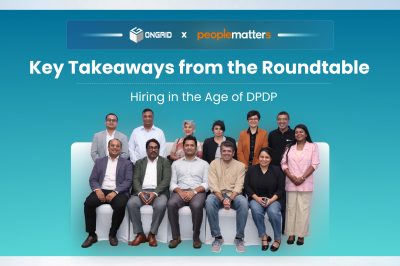
Key Takeaways from the People Matters × OnGrid Roundtable: Hiring in the Age of DPDP
As India’s data protection landscape evolves, hiring is entering a new era—one where efficiency can no longer come at the cost of trust, privacy, or compliance. These themes formed the foundation of the People Matters × OnGrid Executive Roundtable, held in Bengaluru on 15 July 2026, where senior leaders from HR, Talent Acquisition, Compliance, and…
-

Verification Challenges in Blue-Collar Hiring at Scale
India’s blue-collar workforce is the backbone of industries such as logistics, manufacturing, retail, e-commerce, hospitality, construction, healthcare, security services, and facility management. As businesses continue to expand into new cities and scale their operations, hiring thousands of frontline workers has become a business necessity rather than an HR function. However, hiring at scale brings its…