


-
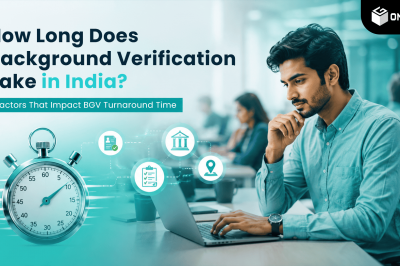
How Long Does Background Verification Take in India? Factors That Impact BGV Turnaround Time
For HR teams, background verification often sits between two competing priorities. The organisation wants to make a confident hiring decision, but the candidate and hiring manager are usually waiting for the process to finish. This leads to one of the most common questions recruiters ask: How long does background verification take in India? There is…
-
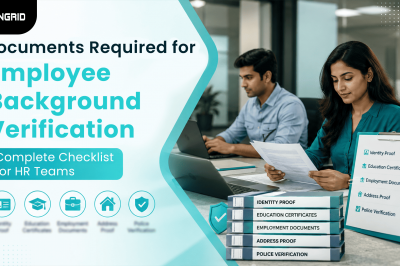
Documents Required for Background Verification: Complete Checklist for HR Teams
Hiring a candidate based on a strong interview is only one part of the recruitment process. Before an employee joins, HR teams also need to establish whether the information shared during recruitment is accurate and whether the candidate meets the organisation’s verification requirements. This is where employee background verification, or BGV, comes in. One of…
-
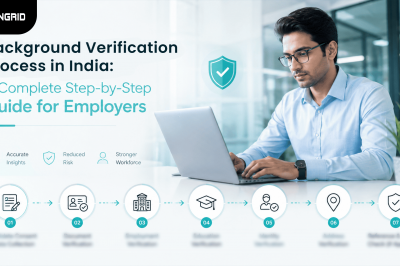
Background Verification Process in India: A Complete Step-by-Step Guide for Employers
Hiring someone is an investment. Before an employee joins, an organisation needs confidence that the information shared during recruitment is genuine and that there are no obvious risks that could have been identified through reasonable screening. That is where the Background Verification Process in India becomes important. Background verification, or BGV, helps employers validate information…
-
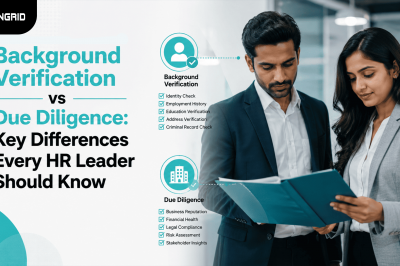
Background Verification vs Due Diligence: Key Differences Every HR Leader Should Know
Hiring the right person is not just about evaluating skills, experience and cultural fit. For organisations operating at scale, there is another question that matters just as much: Can we trust the information provided by the candidate, and have we done enough to understand the risks associated with hiring them? This is where background verification…
-
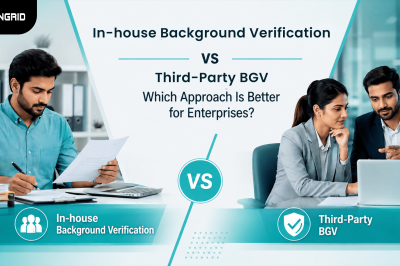
In-house Background Verification vs Third-Party BGV: Which Approach Is Better for Enterprises?
Background verification is no longer just an HR formality that happens after a candidate accepts a job offer. For enterprises hiring hundreds or thousands of employees every year, it has become an important part of risk management, compliance and workforce integrity. As hiring volumes increase, organisations often face a strategic question: should background verification be…
-
Police Verification vs Criminal Record Check: Understanding the Difference
When an organisation is hiring at scale, “police verification” and “criminal record check” can sound like two names for the same thing. Both are associated with a candidate’s legal or criminal history, and both are used to reduce risk during hiring. But they are not necessarily the same check. For HR teams, recruiters and business…
-
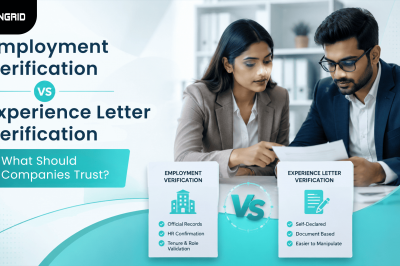
Employment Verification vs Experience Letter Verification: What Should Companies Trust?
Recruiters often receive an experience letter as proof of a candidate’s previous employment. For many organizations, this document has traditionally been considered sufficient evidence that a candidate worked for a particular employer. But in today’s hiring landscape, where resume fraud and document manipulation have become growing concerns, relying solely on an experience letter may not…
-
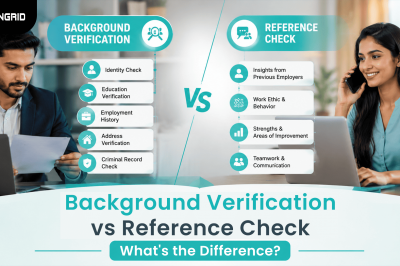
Background Verification vs Reference Check: What’s the Difference?
Hiring the right talent requires more than reviewing resumes and conducting interviews. Recruiters must also validate the information candidates provide before making an offer. Yet, many organizations continue to use the terms background verification and reference check interchangeably, assuming they serve the same purpose. They don’t. While both are important components of the hiring process,…
-
7 Signs a Candidate May Be Misrepresenting Their Experience
-
13 Hiring Risk Questions Every CHRO Should Ask Before Making an Offer
Hiring decisions have always carried a certain level of uncertainty. However, with remote hiring, digital resumes, distributed teams, and rising compliance expectations, the risks associated with hiring have become more complex than ever. For CHROs, hiring is no longer only about finding the right skills at the right time. Every hiring decision impacts business continuity,…