


-
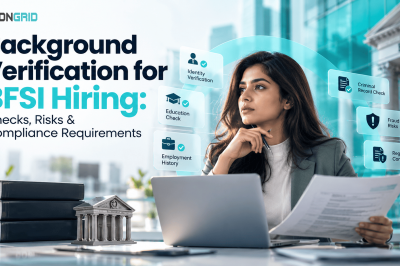
Background Verification for BFSI Hiring: Checks, Risks & Compliance Requirements
Hiring in banking, financial services and insurance is different from hiring for many other industries. A candidate may not just be handling internal documents or company equipment. Depending on the role, they could have access to customer information, financial records, lending systems, payment infrastructure, transaction data, sensitive documents or systems that can directly affect customers.…
-

The Rise of Continuous Verification: Why Trust Cannot End at Onboarding
Short answer: Continuous verification means re-validating a person’s identity and risk-relevant details at defined points during their engagement with you, instead of once at hiring. The rise of continuous verification comes from a simple fact: a background check describes someone on one particular day. Roles change, people move, regulators ask harder questions and fraud methods…
-

Instant Verification vs Intelligent Verification: Is Faster Always Better?
Ask any talent acquisition head what they want from a background verification (BGV) partner and “faster” comes up within a minute. That’s fair. A candidate who waits a week for clearance often accepts another offer. But speed describes the process, not the result. The instant verification vs intelligent verification debate is really about the gap…
-

Why One Verification Check Can Never Tell the Full Risk Story
A candidate’s identity is verified. The name matches. The document is genuine. The check comes back clear. For an HR team, that sounds reassuring. But what does it actually tell you? It tells you that the person’s identity could be established. It does not tell you whether the employment history on the resume is accurate,…
-

Identity Verification Is Just the Beginning: What Comes After You Know Who Someone Is?
A candidate submits their documents. Their name matches. Their date of birth checks out. The identity is verified. For an HR team, that should be good news. But here is the question worth asking: what exactly have you verified? You have verified that the person is who they say they are. You have not necessarily…
-

ATS vs Traditional Recruitment: What Modern Businesses Need
There was a time when hiring five people in a month felt like a busy month for an HR team. A recruiter would post a job, collect resumes in an inbox, shortlist candidates, schedule interviews, and maintain a spreadsheet to track everything. It worked. Until the company started hiring 50 people. Then 200. Then multiple…
-

BGV Documents: Complete List & Requirements for Employee Background Verification
When an employee background verification process gets delayed, the reason is often surprisingly simple. The candidate has not submitted the right document. A degree certificate is missing. An experience letter has an incorrect date. The address proof does not match the current address. A PAN card is submitted instead of an identity document required for…
-

Instant BGV vs Comprehensive BGV: What’s the Difference?
Imagine you have 40 people joining your organisation next Monday. The business wants them onboarded quickly. Recruiters have already spent weeks closing positions. Hiring managers are following up on joining dates. HR operations is preparing employee IDs, access, payroll and documentation. And then someone asks: “Have we completed the background verification?” The answer is usually…
-

Top 5 NSR Empanelled BGV Companies in India
When a company hires for a technology, consulting, BFSI, or other knowledge-intensive role, a conventional background check is only one part of the trust equation. For organizations that use the National Skills Registry (NSR), the verification process has another important layer: ensuring that information submitted by professionals on their NSR profiles is independently verified. This…
-

Top 10 Background Verification Mistakes Companies Make During Hiring
At 10:15 on a Monday morning, the HR team at a growing financial services company received an unexpected call. A client wanted to know why one of their newly onboarded employees had submitted inconsistent professional credentials during a compliance review. The employee had been hired six months earlier. The interviews had gone well. References were…