
Table of Contents
Toggle
The Indian employment scene is in the grip of an intriguing and sometimes controversial argument: moonlighting. What it means? What was once a whispered side income, the practice of workers undertaking secondary jobs outside their main occupation, has entered the mainstream, triggering debates about ethics, work output, and the very nature of work today. For human resources departments and background verification (BGV) firms like us, this developing trend is a complex array of implications that must be carefully evaluated.
Must Read: 141 Jobs in 7 Years: The Moonlighting Case That Shocked Us All
What is Moonlighting, Exactly?
Essentially, moonlighting is an employee having a second job, usually not during their usual work hours. This second activity may take the form of freelance work and consulting, or part-time work in a different profession altogether. The distinguishing factor from having multiple sources of income (such as investments) is having a second form of employment.
What led to the Emergence of Moonlighting in India
A variety of reasons have helped push the prevalence and openness of moonlighting higher in India:
The Gig Economy Boom: The surge of freelance websites and project-oriented work has facilitated it more than ever before for people to locate and take on secondary projects.
Remote Work Culture: With normalizing remote work, lines between personal and professional time have become blurred, and it appears easier for employees to occupy multiple roles with minimal logistic barriers.
Financial Aspirations: Under a culture of increasing expenses and personal financial aspirations, moonlighting provides a means for increasing personal income.
Diversification of Skills and Passion Projects: Certain people moonlight to try out other career options, apply skills not thoroughly exploited in their main profession, or work on personal interests that can earn them money.
Employer Flexibility (in a few instances): Although typically resisted, certain companies, especially from the tech and startup communities, have been quite willing towards moonlighting, as long as it is not in competition with the worker’s main job or company interests.
The Risks Involved in Moonlighting
Though the temptation of extra pay and new skill acquisition is very real, moonlighting is fraught with a serious set of dangers for both employees and employers:
For Employees:
Burnout and Loss of Productivity: Working two jobs can result in burnout and affect performance and productivity in both jobs.
Time Management Issues: Managing time and obligations with two employers efficiently can be extremely taxing and result in delayed deadlines or substandard quality of work.
Possible Conflicts of Interest: Working for a second employer, who is a competitor or in a same-industry sector, can pose ethical challenges and possible violations of confidentiality or non-compete agreements.
Breach of Employment Agreements: Most classic employment agreements expressly forbid or limit secondary employment without advance approval. Performing undisclosed moonlighting may result in disciplinary action, including dismissal.
Tax Consequences: Balancing income from several sources may blur tax reporting and increase tax burdens if not managed properly.
Personal Life Impacts: The time spent moonlighting can interfere with personal time, impacting relationships, physical health, and general well-being.
For Employers:
Decreased Efficiency and Productivity: Multitasking employees can be tired and lose concentration, which may cause them to be less productive and make mistakes in their main job.
Competitor Interests and Data Security Threats: Employees working with competitors or in related industries have a high chance of intellectual property theft, data exposure, and leakage of confidential information.
Breach of Loyalty and Commitment: Unreported moonlighting may be interpreted as a breach of loyalty and commitment to the main employer.
Legal Concerns: Where an employee’s activity in moonlighting results in legal issues (e.g., copyright infringement, violation of contract with a second employer), the main employer might indirectly be held liable or suffer reputational loss.
.
Challenges in Performance Assessment: Measuring an employee’s actual performance and potential becomes complicated when their energy and concentration are split.
Company Culture Influence: Prevalent unmaintained moonlighting may destroy team bonding and establish a culture of secrecy and mistrust.
The Background Verification (BGV) Maze and Moonlighting
The emergence of moonlighting poses new challenges to background verification procedures. Conventional BGV checks are mainly based on a person’s employment history, criminal history, education, and address. But for identifying current, undisclosed moonlighting, more sophisticated and possibly invasive measures are needed.
The following explains how moonlighting makes BGV challenging
Detection Difficulty: Secondary employment is usually hidden from managers, so it is hard to detect through conventional BGV procedures.
Privacy Concerns: Implementing intrusive methods to detect moonlighting, such as monitoring online activity or social media, raises significant privacy concerns and legal hurdles.
Evolving Employment Contracts: Companies are increasingly revisiting their employment contracts to explicitly address moonlighting, requiring BGV processes to verify adherence to these clauses.
The Requirement of Ongoing Monitoring: A single BGV verification at the point of employment can prove inadequate. Ongoing monitoring could be required to identify moonlighting that begins following employment.
Ethical Issues for BGV Firms: BGV firms must work through the ethical issues of identifying moonlighting without infringing on employee privacy and within legal parameters.
What is an Employment History/Moonlighting Check?
It takes advantage of the EPFO database and UAN number to fetch the employment history of the candidate.
It can confirm:
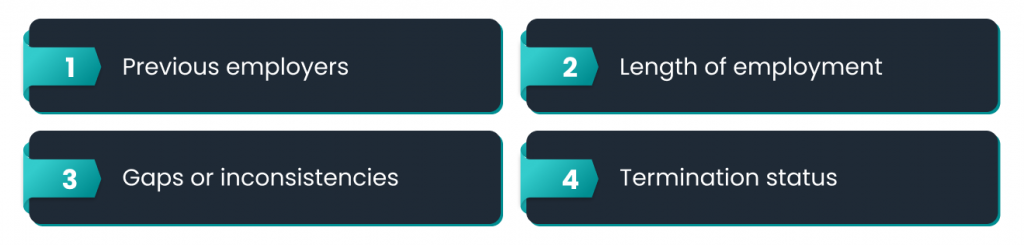
It also often identifies multiple jobs now or clandestine gig periods that may be impacting performance and compliance in most instances.
Whether you’re bringing in a new hire or reviewing your current employees, OnGrid’s EHC gives you the clarity you need.
The Way Forward
The issue of moonlighting in India is likely to persist. A balanced response is called for, given the aspirations of workers, the genuine concerns of employers, and the changing nature of work. Transparent communication, company policies clearly articulated, and employee well-being and engagement concerns may prove more effective in curbing the root causes of moonlighting than mere detection.
For BGV and HR companies, the answer is in becoming aware of the subtleties of this trend, making changes in policies and procedures responsibly, and promoting a culture of trust and openness.
FAQs on Moonlighting
Q1: Is moonlighting illegal in India?
A: As of now, there is no direct law in India that prohibits moonlighting. Nevertheless, most employment contracts include terms that ban or limit secondary work without the permission of the employer. Breaking these terms may result in disciplinary action.
Q2: What are the reasons why companies worry about moonlighting?
A: Companies are mostly worried about diminished productivity, possible conflict of interest, security risks to data, and perceived lack of commitment on the part of workers indulging in unreported moonlighting.
Q3: Are there any advantages of moonlighting to employees?
A: Yes, they can include income supplementation, skill broadening, career exploration, passion projects, and financial freedom.
Q4: How can employees ethically moonlight?
A: Employees must be honest with their main employer (if their agreement permits), make sure secondary work doesn’t affect their main job performance, avoid conflicting interests, and effectively manage their time to avoid exhaustion.
Q5: Are background verification firms legally able to identify whether an employee is moonlighting?
A: Direct identification of hidden moonlighting is difficult and is a privacy issue. Classic BGV is concerned with history. More invasive approaches must be viewed legally and ethically and might not be invariably allowed. BGV can concentrate on checking compliance with terms of employment contracts around secondary employment and conflict of interest statements.
Q6: What can companies do to solve the problem of moonlighting?
A: Companies must have open and transparent secondary employment policies, be effective in communicating such policies, know why their employees are moonlighting, and prioritize employees’ welfare and motivation.
Q7: Is there a distinction between moonlighting and earning passive income streams?
A: Yes, moonlighting is working a second job actively, whereas passive sources of income (such as investments or rental income) don’t involve active employment.
Q8: Why does remote work help with moonlighting?
A: Remote work can de-differentiate work and personal time, and it may appear more convenient for workers to work a second job without the logistics of an office setup.
Q9: What is the future of moonlighting in India?
A: The future is unclear and will probably depend on the changing work cultures, interpretations of the law, and the constant debate between employers and employees. Greater flexibility on the part of some employers, combined with increased openness on the part of employees, could be the key.
Q10: How can technology be used to tackle moonlighting risks?
A: Technology can most likely be utilized to conduct ongoing monitoring (with permission and legal protection) and to enable open declarations of secondary employment. But ethical concerns and privacy protection take precedence.





Leave a Reply