
Table of Contents
ToggleWalk into any modern office today—open or hybrid, tech or non-tech—and you’ll notice something interesting.
We talk a lot about automation, AI, digital transformation, and disruption. But behind all of it, the biggest question is still the oldest one:
“Are the people here safe, supported, and trusted?”
It’s a quiet truth:
Technology doesn’t replace the human workplace; it protects it.
AI doesn’t take away people; it takes away uncertainty.
And safety—physical, emotional, informational—is slowly becoming the defining pillar of the future workplace.
This is where the dots start to connect.
The New Workplace Reality: Fast, Fluid, and Vulnerable
Workplaces today are transforming faster than their policies. Hybrid teams, contract workers, gig staff, outsourced roles, remote hiring, and rapid onboarding have created an ecosystem where trust must be verified, not assumed.
Yet despite all the change, expectations remain the same:
- Employees want to feel safe walking into work.
- Companies want to hire people they can trust.
- Clients want to know the teams they interact with are vetted.
- Society wants workplaces that are accountable.
Technology isn’t just “supporting” this.
It’s reshaping it.
From criminal checks and police clearance certificates to AI-driven deepfake detection and digital identity validation, safety is no longer paperwork—it’s infrastructure.
Why Human Workplaces Need Stronger Safety Systems
A workplace becomes “human” not because it has a ping-pong table, hybrid policies, or mental-health leaves.
It becomes human when people feel protected.
Let’s understand why safety is at the heart of humanity at work:
1. Safety builds trust.
Employees open up, collaborate better, and feel emotionally secure when they know everyone around them is vetted and accountable.
2. Trust reduces fear.
Fear—of impersonation, harassment, fraud, violence, misconduct—breaks workplaces long before performance issues ever do.
3. Accountability drives fairness.
Verification systems ensure hiring decisions are based on truth—not biases, guesswork, or risks.
4. Safety enables belonging.
When employees feel the organisation has their back, they’re more likely to stay, contribute, and care.
And this is where AI quietly steps in—not as a disruptor but as a protector.
The New Relationship Between AI and Workplace Safety
AI has entered workplace safety not with loud headlines but with silent efficiency.
From verifying a candidate in seconds to catching deepfake interviews, AI is becoming the invisible shield that guards the human core of organisations.
Here’s how.
AI vs Deepfakes: Protecting the First Hello
Hiring has become a digital-first interaction.
- Face-to-face interviews are often replaced by Zoom calls.
- Documents are shared on email.
- ID proofs are uploaded on portals.
And this shift brought a new risk: deepfake impersonation.
You’ve probably seen viral deepfake videos of celebrities saying things they never said. But imagine this in a hiring scenario:
- A candidate appears for an interview using a fake face overlay.
- A freelancer verifies their identity using a manipulated video.
- A fraudster attempts onboarding using someone else’s documents.
This isn’t sci-fi. It’s happening every day.
AI-driven liveness detection and deepfake-detection algorithms now catch:
- unnatural facial movements
- pixel-level distortions
- inconsistencies in shadow patterns
- mismatched lip-sync signatures
- manipulation artefacts invisible to the human eye
This isn’t about making hiring “high-tech.”
It’s about ensuring that the first hello—the first handshake—is honest.
Because if we cannot trust the identity at the entry point, the workplace is compromised from day one.
Digital Identity Verification: Speed Without Blindness
There was a time when identity verification meant submitting documents physically, waiting days for checks, and hoping nothing went wrong in between.
Today, digital verification pulls data from verified sources, builds trust layers, and ensures zero manual tampering.
These checks now include:
- PAN, Voter ID & other national id verification
- Passport and driving licence validation
- Database checks for impersonation or misuse
- Face match between documents and selfies
AI is ensuring that “easy onboarding” doesn’t mean “blind onboarding.”
It doesn’t replace decision-makers; it gives them clarity.
Criminal Background Checks: The Most Human Need of All
We may not say this openly, but every employee silently wonders:
“Are the people around me safe?”
And every organisation quietly worries:
“Are we letting someone dangerous into the workplace?”
Criminal background checks aren’t about suspicion—they’re about prevention.
With centralised police records becoming digital, AI now helps:
- match names with fuzzy logic
- detect disguised identities
- flag high-risk behaviours
- reduce manual errors
- ensure faster clearance
This allows workplaces to maintain physical and psychological safety—something employees don’t always ask for, but always expect.
These checks don’t create fear.
They remove it.
Police Clearance Certificates: Accountability That Moves With People
The modern workforce is mobile.
People shift cities, companies, and roles faster than ever.
Police clearance certificates (PCC) bring geographical accountability to this movement.
AI integration in PCC workflows helps:
- reduce verification delays
- eliminate identity mismatches
- track status in real-time
- digitise interface between police departments and employers
This keeps workplaces safe in a world where movement is constant and boundaries are fluid.
Drug Testing in the Digital Age: Not Policing, Just Protecting
Drug misuse isn’t just a personal issue—it becomes a workplace risk when it affects judgment, behaviour, or security.
Technology-driven drug testing has evolved from traditional lab formats to:
- AI-powered image capture for test kits
- instant validation of results
- video-supervised testing to avoid tampering
- digital audit trails for authenticity
This isn’t surveillance.
It’s safeguarding.
A workplace with clarity around wellbeing becomes a workplace grounded in dignity.
Workplace Safety 2.0: The AI-Enabled Transformation
Here’s the truth:
AI isn’t just verifying people.
It’s verifying the environment.
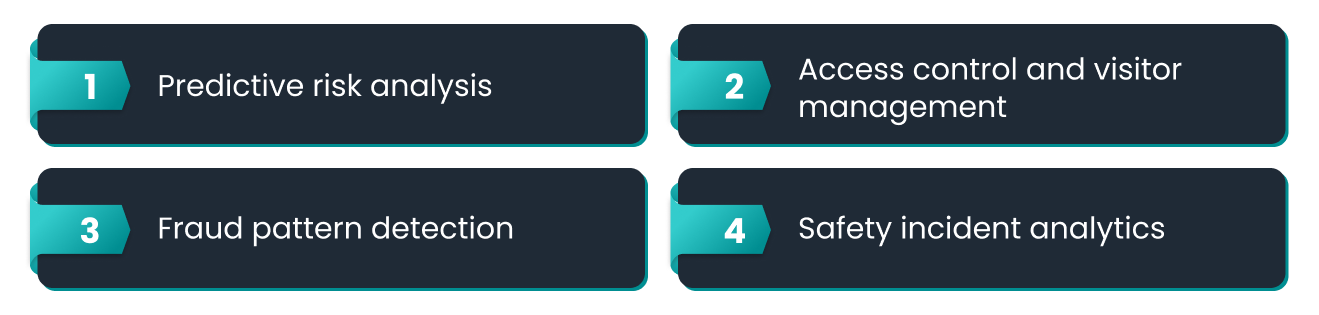
1. Predictive risk analysis
AI tools detect anomalies in employee behaviour patterns, attendance data, or access logs—helping organisations prevent issues before they escalate.
2. Access control and visitor management
Face-based access systems ensure that only the right people walk in—no tailgating, no impersonation.
3. Fraud pattern detection
Whether in financial, HR, or identity processes, AI identifies inconsistencies humans often miss.
4. Safety incident analytics
AI clusters incidents to identify patterns, hotspots, and potential systemic problems.
What does this mean for employees?
A workplace where safety isn’t reactive—it’s proactive.
A Better Perspective: Safety as a Collective Contract
When we talk about safety, we often see it as a company’s job.
But the truth is more beautiful:
- Workplace safety is a shared relationship.
- Employers commit to verifying responsibly.
- Employees commit to honesty and compliance.
- Teams commit to respecting boundaries.
- Technology commits to supporting everyone.
And when all these pieces come together, something powerful happens:
Workplaces stop being “places of work” and start becoming communities of trust.
Everyone—from a frontline gig worker to a senior leader—gets to show up fully without fear.
Connecting the Dots: A Future Where AI Makes Work More Human
The future of work won’t be defined by AI, automation, robotics, or verification systems alone.
It will be defined by how we use them.
A world where…
- AI catches deepfakes so humans don’t fall for deception.
- Technology verifies identities so people can focus on relationships.
- Criminal checks ensure safety so employees can feel secure.
- Drug tests maintain clarity so teams can function responsibly.
- PCCs protect mobility so trust moves with talent.
- Digital verification removes doubt so confidence can flourish.
This isn’t a “tech-enabled workplace.”
It’s a human-enabled workplace—made possible by technology.
And that is the ultimate connection.
Not man vs machine.
Not tech vs people.
Not AI vs jobs.
But AI + People = Workplaces Where Humans Thrive.


Leave a Reply