
Background verification
-
Why Manual BGV Is Bleeding NBFC Hiring Pipelines
There’s a quiet attrition problem eating into NBFC hiring pipelines — and it has nothing to do with salary packages or brand reputation. It’s happening in the gap between offer letter and joining date. Specifically, in those 10 to 15 days where a candidate sits idle, waiting for a background verification process to crawl its…
-

Dark Stores, Quick Commerce & Workforce Fraud Risks
India’s quick commerce sector didn’t just grow — it restructured how urban retail works. What started as a niche convenience play has quietly become critical infrastructure. And like all infrastructure built at speed, the cracks worth paying attention to aren’t in the technology or the supply chain. They’re in the workforce layer that holds everything…
-
Top 10 NSR Empanelled Background Verification Companies in India
Hiring today is no longer just about finding talent. It is about finding trustworthy talent at scale. As Indian enterprises accelerate hiring across IT services, GCCs, fintech, consulting, startups, and gig-based workforces, background verification has moved from being an HR formality to a core risk management function. A single bad hire can impact compliance, data…
-
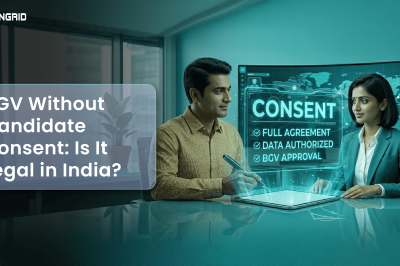
BGV Without Candidate Consent: Is It Legal in India?
Every week, someone in an HR team somewhere in India sends a candidate’s documents to a BGV vendor before the offer letter is even signed — let alone before asking permission. It happens quietly, routinely, and often with zero awareness that it might be illegal. So let’s address this head-on: Can you run a background…
-
The Growing Need for Platform Worker Verification in the Gig Economy
Here’s a scenario that plays out more often than platforms like to admit. A delivery partner onboards on a Tuesday. He uploads a driving licence, a selfie, and a bank account number. Automated checks clear him in under four minutes. By Thursday, he’s assigned to premium slots. By the following week, there’s a complaint —…
-

Healthcare BGV: Why Nurse and Paramedic Verification Is Critically Underrated
There’s a quiet assumption that runs through most hiring conversations in Indian healthcare: that clinical staff are somehow self-regulating. That a nurse wouldn’t fake a degree. That a paramedic wouldn’t hide a termination. That the urgency of filling a ward bed or a 108 ambulance seat is reason enough to skip the paperwork. It isn’t.…
-
Pre-Offer vs Post-Offer BGV: Which Model Works Better for Indian Companies?
Hiring in India has evolved quietly over the past few years. What used to be a linear process—screen, interview, offer, onboard—has become far more layered. With distributed teams, faster hiring cycles, and increasing compliance requirements, companies are now rethinking when background verification (BGV) should actually happen. That’s where the discussion around pre offer vs post…
-
How Employers Detect Fraudulent Candidates
Hiring has changed. It’s faster, more digital, and often remote. But while the process has become smoother on the surface, something else has quietly grown alongside it—candidate fraud. Not the obvious kind. Not fake IDs or clearly forged documents. The kind that looks almost real. A polished resume. A believable work history. Clean documents. Confident…
-

Background Checks for Warehouse Employees
Warehouses are built for speed. Orders come in, goods move out, and everything in between is designed to be efficient. But behind that efficiency is a workforce that operates with a surprising amount of trust—handling inventory, managing dispatches, and often working in high-volume, low-supervision environments. That’s exactly why warehouse staff verification has moved from being…
-
Why Staffing Companies Need Background Verification
Staffing has always been about speed. Clients need people yesterday. Roles open up suddenly. And staffing companies are expected to deliver—quickly, consistently, and without errors. But here’s the trade-off no one talks about enough: the faster you hire, the easier it is to miss something. A slightly exaggerated resume. A fake experience letter. A candidate…
Recent Posts
- Criminal Record Check in India: What Employers Need to Know

- Background Verification Documents for Healthcare Staff: A Checklist for HR

- Handling Candidate Disputes During BGV: A Practical Guide for HR Teams
- The Hidden Risk of Fragmented Verification in Modern BGV

- Education Verification in BGV: Process, Challenges and Best Practices

Categories
- Accountability 3
- Address verification 4
- Background verification 125
- BFSI 2
- Case Study 5
- Criminal Verification 19
- Drug test 2
- Due Diligence 34
- Education Verification 9
- eLockr 9
- Employment Verification 29
- Gridlines 4
- HR 2.0 64
- Identity Verification 36
- Industry 4.0 27
- OnGrid 74
- Uncategorized 6
Tags
#AadhaarVerification #BackgroundChecks #Background Verification #BGV #LocalAddressVerification #PoliceVerification #Trust Background check Background Verification background verification process in india bgv BGV in India business due diligence Compliance credit check Digital Identity Digital Onboarding Employee Screening Fraud Prevention Gig Economy hiring compliance HR 2.0 HR Best Practices HR Tech identity verification OnGrid physical due diligence Remote Onboarding vendor due diligence Verification