
Table of Contents
Toggle
India’s Global Capability Centres (GCCs) are playing an increasingly pivotal role in the global business ecosystem. These centres offer multinational companies a range of operational and technological services, but they also introduce potential risks that need careful management. One of the best ways to protect these operations is through effective background verification (BGV). With the growing importance of GCCs in India, this process is becoming even more essential to maintain security, trust, and operational integrity.
Must Read: Global Capability Centers in India
What Are Global Capability Centres (GCCs)?
Global Capability Centres are centralized hubs set up by multinational corporations to manage critical business functions such as finance, IT services, R&D, customer support, and human resources. These centres enable companies to benefit from India’s skilled workforce, competitive labor costs, and favorable business environment.
GCCs serve as vital extensions of a company’s global operations, offering a way to leverage local talent and capabilities while ensuring cost-effectiveness. India, with its extensive pool of educated professionals, is a preferred destination for these centres. According to NASSCOM, India accounts for more than 55% of the global sourcing market, hosting over 1,500 GCCs across various sectors.
The Impact of GCCs on India’s Corporate Environment
GCCs have dramatically transformed India’s corporate landscape, contributing to job creation, technological innovation, and overall economic growth. By providing cost-efficient services and tapping into local expertise, these centres have enhanced productivity and operational efficiency. They are crucial for major industries, including IT, banking, healthcare, and telecommunications, facilitating seamless integration between local and international teams and helping companies remain competitive.
The success of these centres is largely due to India’s dynamic workforce, which is capable of handling a wide range of complex tasks at lower costs compared to many other countries. As the number of multinational companies continues to grow, so does the significance of GCCs in shaping India’s role in the global market. In fact, the total value of GCCs in India is expected to reach $60 billion by 2025, marking a substantial growth trajectory in their role within global business operations.
Managing Risks and Securing Business Operations
While GCCs offer tremendous opportunities, they also present several security risks. Given that these centres manage sensitive data, intellectual property, and customer information, ensuring the integrity of employees is crucial. A breach in security or a lapse in ethical standards can lead to significant financial and reputational damage.
In such a high-risk environment, it becomes essential for companies to implement stringent background verification processes to ensure the trustworthiness and capability of their employees. This process serves as the first line of defense against potential threats, including fraud, identity theft, and other criminal activities.
Rising Demand for Background Checks in GCCs
The need for comprehensive background checks has escalated with the exponential growth of GCCs. As companies expand their operations and recruit a large volume of employees, the risks associated with hiring unverified individuals also increase. With the increasing diversity of candidates—coming from various regions and backgrounds—the probability of encountering discrepancies or fraudulent information grows.
Background verification thus becomes a fundamental process to mitigate these risks. By conducting thorough checks, companies can ensure they are hiring the right individuals, safeguarding their operations, and protecting their assets. The rise in hiring volumes and the complex nature of modern job functions in GCCs further underscore the need for a robust verification process.
Key Verifications for Effective GCC Operations
Different positions within a GCC require varying levels of verification. Depending on the role, companies must perform a range of checks to assess a candidate’s credibility and suitability. Some of the most important background checks for employees in GCCs include:
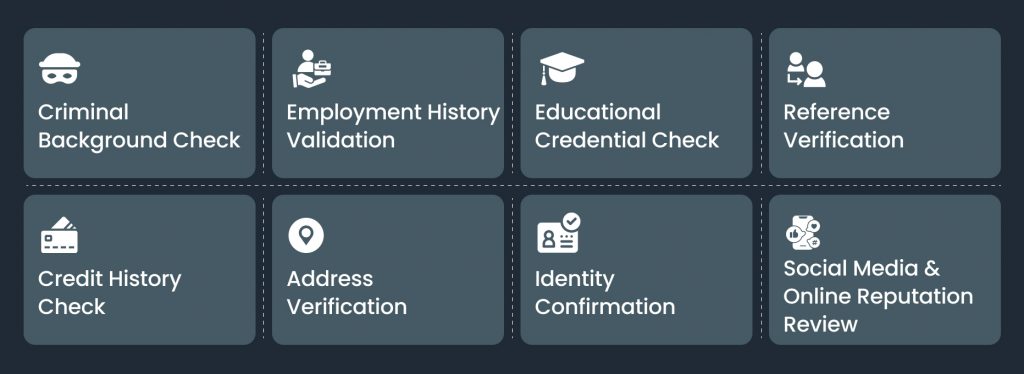
Criminal Background Check: Ensuring candidates have no criminal history is critical, particularly for positions with access to sensitive company data. This check reduces the likelihood of hiring individuals who could pose security threats.
Employment History Validation: Verifying previous job roles and the length of employment ensures that candidates are truthful about their work experience and qualifications. This is especially crucial for roles that demand a certain level of expertise.
Educational Credential Check: With the rise of fake degrees and certificates, verifying a candidate’s educational qualifications is a key step in the background verification process, especially for highly technical or senior positions.
Reference Verification: Contacting previous employers and colleagues provides a more comprehensive view of the candidate’s work ethic, performance, and suitability for the role.
Credit History Check: For roles that involve financial responsibilities, a credit check can help assess a candidate’s trustworthiness and financial integrity.
Address Verification: Confirming the candidate’s residential details helps prevent identity fraud and ensures the accuracy of the candidate’s information.
Identity Confirmation: Verifying the authenticity of a candidate’s identity is crucial in avoiding potential fraudulent hires. This check ensures the person applying is indeed who they claim to be.
Social Media and Online Reputation Review: Analyzing a candidate’s online presence can offer valuable insights into their character, behavior, and personal values, helping employers make more informed decisions.
Role of Technology in Enhancing BGV Processes
Technology is revolutionizing the way background verification is conducted. Automated systems and artificial intelligence (AI) are transforming BGV into a faster, more efficient, and accurate process. With these innovations, companies can handle large volumes of recruitment with greater precision, reducing the potential for human error and ensuring a thorough examination of every candidate’s background.
Key technological advancements that are enhancing BGV for GCCs include:
AI and Machine Learning: These technologies analyze vast datasets, detect patterns, and identify discrepancies that may have been overlooked by traditional methods. As machine learning algorithms improve, so does the accuracy and efficiency of the verification process.
Blockchain: Blockchain technology is emerging as a powerful tool for background checks, especially for verifying credentials like educational qualifications and work experience. Blockchain’s decentralized, immutable nature ensures that the information provided is both transparent and reliable.
Automated Verification Platforms: Several third-party platforms now offer automated background checks for criminal records, educational qualifications, and previous employment history. These platforms reduce manual intervention and expedite the verification process.
Cloud-Based Solutions: Cloud technologies provide scalable, secure, and easily accessible data storage, allowing for efficient sharing of candidate information and ensuring that the background verification process remains up-to-date and transparent.
Challenges in Conducting Background Verification and How to Overcome Them
Despite the many benefits, implementing effective background verification can be challenging. Some of the most common obstacles include:
Lack of Consistency Across the Industry: Companies may have varying BGV procedures, leading to discrepancies in the depth and thoroughness of checks. To address this, businesses should adopt standardized verification protocols and work with trusted vendors who provide consistent and reliable services.
Limited Access to Accurate Data: Obtaining up-to-date and reliable information, particularly for candidates from different geographical regions, can be difficult. To overcome this, companies can partner with global verification agencies that have access to a wide range of reliable data sources.
Navigating Regulatory Compliance: Background checks must adhere to various labor laws and data privacy regulations. This can complicate the verification process, especially when hiring employees across different jurisdictions. To ensure compliance, companies should stay updated on relevant laws and seek legal counsel when necessary.
The Importance of Thorough Background Checks for GCCs
Effective background verification is not merely a procedural formality but a strategic safeguard that ensures the integrity of a company’s workforce. It provides companies with the assurance that the individuals they hire are trustworthy, skilled, and reliable. Thorough background checks also reduce the risk of financial loss, reputational damage, and security breaches, creating a more secure working environment.
For GCCs, in particular, the stakes are even higher. With employees handling critical business functions and sensitive information, a breach of trust can have devastating consequences. By implementing comprehensive BGV, companies can ensure that they build strong, capable teams that will help drive their global operations forward.
The Future of Background Verification in GCCs
Looking ahead, the role of background verification in GCCs will only continue to grow. As the workforce becomes more global and diverse, the need for reliable, accurate, and efficient verification processes will be even more pronounced. Companies will increasingly rely on advanced technologies like AI, machine learning, and blockchain to streamline the process and ensure consistency across the board.
In the future, BGV will not just be a requirement but a strategic tool for mitigating risk, building trust, and ensuring long-term success for GCCs. As the world becomes more interconnected, the importance of robust background verification will remain a cornerstone of corporate security and operational efficiency.
In conclusion, comprehensive background verification is an indispensable component of any successful GCC operation. As India continues to lead the global GCC landscape, investing in thorough verification processes will ensure that companies remain secure, compliant, and well-positioned for growth.






Leave a Reply