
Table of Contents
ToggleHiring in India today is fast. Sometimes too fast.
A resume looks solid, references sound convincing, and the pressure to close the position is real. But here’s the uncomfortable truth: one wrong hire can cost far more than a delayed one.
That’s where a structured background verification process in India becomes critical—not as a formality, but as a safeguard.
This isn’t a checklist you rush through. It’s a system you build.
Let’s break it down.
Why Background Verification Isn’t Optional Anymore
A few years ago, background checks were mostly reserved for senior roles or finance-heavy positions.
Today?
- Fake employment records are easier to fabricate
- Identity fraud has become more sophisticated
- Compliance expectations are stricter
And most importantly, companies are hiring at scale—often without meeting candidates in person.
Which means trust is no longer intuitive. It has to be verified.
The 7-Step Background Verification Process in India
Think of this as your HR playbook—simple, structured, and scalable.
1. Start with Candidate Consent (Don’t Skip This)
Before you verify anything, get clear, documented consent from the candidate.
In India, background checks without consent can create legal and ethical issues. More importantly, transparency builds trust from day one.
What to include:
- Scope of verification
- Data sources being checked
- Candidate authorization
A simple digital consent form works well, especially for remote hiring.
2. Identity Verification: The Foundation
Everything starts here.
If the identity isn’t verified properly, every other check becomes questionable.
Typically, HR teams verify:
- Aadhaar
- PAN
- Address details
The goal isn’t just matching documents—it’s ensuring the person exists exactly as claimed.
3. Employment Verification: Where Most Risks Hide
This is where things get interesting.
Employment discrepancies are one of the most common issues in hiring. Candidates may:
- Inflate tenure
- Modify roles
- Omit short stints
- A proper verification involves:
- Confirming company name and tenure
- Validating designation
- Cross-checking reporting structure (if needed)
Many HR teams rely only on documents. That’s risky. Direct verification with employers or trusted databases is far more reliable.
4. Education Verification: More Than Just Degrees
Degrees are easy to list, but not always easy to trust.
Fake universities and forged certificates still exist. Even legitimate degrees can be misrepresented.
What to verify:
- Institution authenticity
- Degree completion
- Year of passing
This step is especially important for roles where qualifications directly impact job performance.
5. Criminal Record Check: A Necessary Filter
Not every role requires deep criminal screening, but for many industries, it’s non-negotiable.
This includes:
- Court record checks
- Police verification (in some cases)
The idea isn’t to eliminate candidates unfairly, but to identify potential risks early.
6. Address Verification: Ground Reality Check
A candidate’s address tells you more than you think.
It helps:
- Confirm identity consistency
- Validate stability
- Reduce impersonation risk
In India, this can be done through:
- Physical verification
- Digital databases
- Utility records
Even a simple mismatch here can signal deeper inconsistencies.
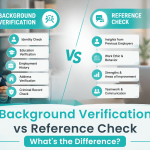
7. Reference Check: The Human Layer
After all the data points, this is where human insight comes in.
Speaking to past managers or colleagues can reveal:
- Work ethic
- Behavioral traits
- Team compatibility
But here’s the catch—reference checks should validate, not replace structured verification.
Quick Overview: Background Verification Steps
| Step | What It Covers | Why It Matters |
| Candidate Consent | Authorization | Legal & transparent process |
| Identity Verification | Aadhaar, PAN | Foundation of all checks |
| Employment Check | Work history | Detects misrepresentation |
| Education Check | Degrees | Validates qualifications |
| Criminal Check | Legal records | Identifies risk |
| Address Verification | Residence proof | Confirms authenticity |
| Reference Check | Feedback | Adds human context |
Common Mistakes HR Teams Make
Even experienced teams slip up here.
1. Treating Verification as a Formality
Rushing through checks defeats the purpose. A fast process is good—but not at the cost of accuracy.
2. Relying Only on Documents
Documents can be edited. Data-backed verification is far more reliable.
3. Using Multiple Vendors
Fragmented verification leads to delays, inconsistencies, and lack of accountability.
4. Skipping Checks for “Trusted Profiles”
Some of the biggest risks come from candidates who look the most credible on paper.
How Modern HR Teams Are Fixing This
The traditional background verification process in India was slow, manual, and often inconsistent.
That’s changing.
Today, companies are moving towards:
- Real-time verification systems
- Centralized platforms
- Automated workflows
Instead of chasing multiple vendors and waiting days for reports, HR teams now prefer unified solutions that offer visibility and speed.
Platforms like OnGrid are helping companies streamline this entire process—from onboarding to final verification—without compromising accuracy.
Final Thoughts
Hiring is ultimately a trust decision.
But in today’s environment, trust can’t be based on intuition alone.
A structured background verification process in India ensures that every hire is backed by data, not assumptions.
Because the real risk isn’t the candidate who looks suspicious.
It’s the one who doesn’t.




Leave a Reply