
Table of Contents
ToggleQuick-commerce, or q-commerce, has revolutionized how consumers are buying. With guarantees of deliveries in less than an hour, dark stores strategically placed within cities, and ultra-efficient networks of logistics, the industry has evolved into a pillar of urban retailing. But with this expansion is heightened regulatory pressure.
Inspections nationwide have brought out the essential reality: customer satisfaction is driven by speed, but at the expense of safety and regulatory compliance. Certain dark stores have endured operational issues like shelving expired products alongside fresh ones, lack of temperature management, and the absence of food business permits. These events point to the fact that compliance is not merely ceremonial but a necessity for sustainable operations in q-commerce.
Regulatory bodies, such as the Food Safety and Standards Authority of India (FSSAI), leave no doubt: non-compliance can lead to instant shutdowns, heavy fines, and long-term loss of brand reputation.
Most Common Compliance Traps in Ultra-Fast Deliveries
The same features that make quick-commerce possible—speed, decentralization, and low overhead—contribute to making it susceptible to compliance issues.
1. Licensing Gaps
Lack of a valid FSSAI license is one of the most common non-compliance issues. License is a legal requirement for any company dealing with, storing, or distributing food. Such companies risk regulatory action, no matter how effective their delivery network is.
2. Storage and Hygiene Issues
Dark stores tend to be small, automated, and under-staffed. Though this enhances operating efficiency, it increases the threat of hygiene failures. Inadequate storage, pest control lapses, and temperature mishandling have the potential to undermine food safety and invite regulatory attention.
3. Vendor Compliance Oversights
Quick-commerce operations are supported by a web of suppliers, vendors, and final-mile partners. Ignoring vendor licenses, permits, or food safety compliance can pose serious legal and operational threats.
4. Unreliable Internal Audits
Regular audits are paramount in an industry where hundreds of orders are fulfilled each day. Most operations circumvent or perform weak internal checks, which overlooks potential compliance violations until governing agencies step in.
Building a Compliance-First Quick-Commerce Operation
Proactive, methodical compliance with regulations in the fast-paced arena of quick-commerce is needed.
1. Obtain All Necessary Licenses
Licensing is the front line of defense against regulatory measures. Companies need to:
- Apply for an up-to-date FSSAI license specific to their business.
- Keep proper records and renew licenses in a timely manner.
- Find other industry-specific permits, if any, such as GST registration or import/export permits.
2. Have Strong Storage and Hygiene Standards
Food safety cannot depend on chance. Companies should:
- Keep clean, temperature-controlled storage, utilizing calibrated equipment.
- Regularly sanitize, control pests, and dispose of waste.
- Have regular medical checks and hygiene training for all workers who touch food.
3. Intensify Vendor Verification and Monitoring
Suppliers and third-party vendors need to be of the same quality as in-house operations. Companies can:
- Perform KYC checks on all vendors.
- Digitally verify FSSAI licenses and other credentials.
- Periodically audit vendor facilities to verify repeated compliance.
4. Monitoring and Audits on an Ongoing Basis
- Compliance is not an exercise undertaken once. Companies must:
- Carry out periodic internal audits of stock quality, storage, and hygiene in operations.
- Install automatic reminders for expiration dates of licenses, delayed inspections, or possible infringements.
- Keep precise records to prove compliance with regulatory standards under surprise checks.
How OnGrid Assists Companies in Remaining Ahead
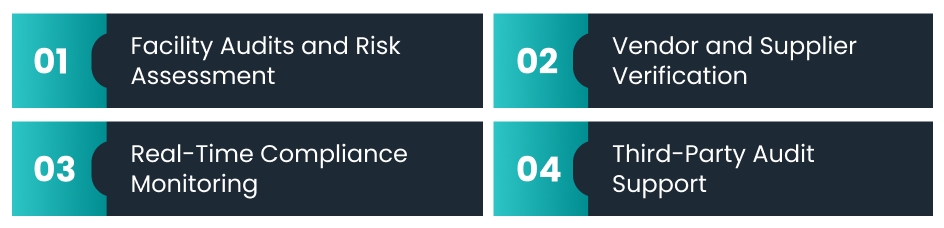
Compliance is a journey, not a destination. We at OnGrid believe that our solutions should support quick-commerce companies in running confidently while ensuring they remain compliant with regulation.
1. Facility Audits and Risk Assessment
We assess all aspects of your operations, ranging from inventory reconciliation to access control and SOP compliance, preventing operational gaps from turning into compliance issues.
2. Vendor and Supplier Verification
Our platform allows businesses to perform thorough background and license verification for vendors. This ensures your supply chain is not only efficient but also fully compliant with food safety and operational regulations.
3. Real-Time Compliance Monitoring
Our monitoring solutions provide businesses with proactive alerts, periodic checks, and dashboards that track the compliance health of your operations. This helps ensure that nothing slips through the cracks in high-paced environments.
4. Third-Party Audit Support
For companies that depend on partner networks, OnGrid supports third-party due diligence, risk scoring, and validation of food safety documentation, minimizing the likelihood of regulatory infractions.
Conclusion
Quick-commerce’s rapid expansion brings unparalleled opportunity, but also increased regulatory burden. Compliance is not an administrative expense—it is a strategic imperative that insulates your business, your customers, and your reputation.
With the proper systems, audits, and monitoring in hand, companies can succeed in this high-speed industry with minimal risk. OnGrid’s range of solutions prepares firms to not only meet regulatory standards but also to bake compliance into the very fabric of their business, making safety and compliance a competitive edge.






Leave a Reply