
Table of Contents
ToggleDigital Address Verification (DAV) is becoming a key tool for businesses to streamline onboarding, ensure compliance, and prevent fraud. As more companies adopt digital verification technologies, this white paper highlights the key trends, drivers of adoption, and industry-wide impact based on recent data and insights.
Growth in Digital Address Verification
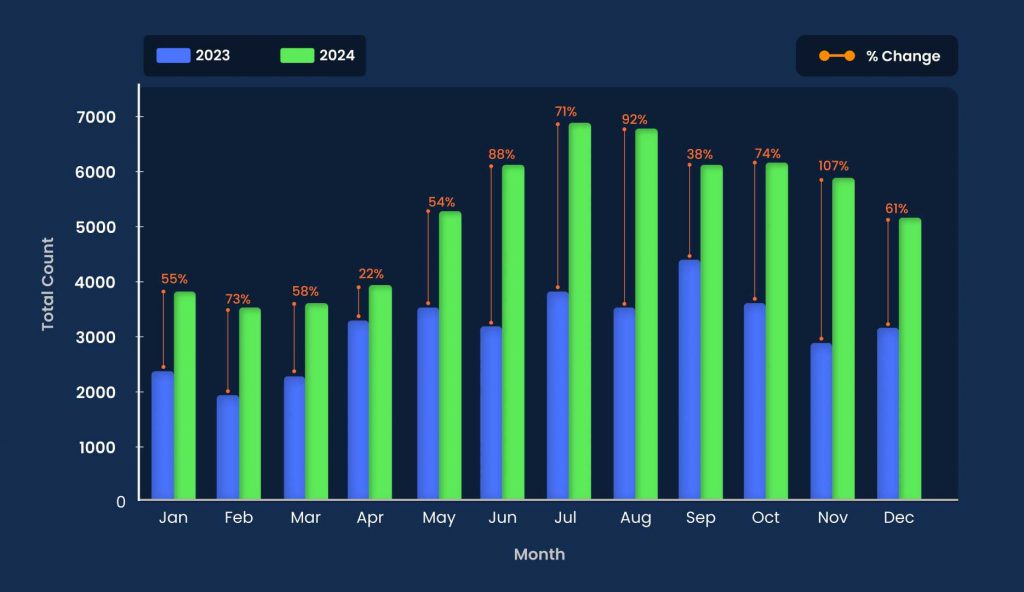
The adoption of Digital Address Verification has seen significant growth from 2023 to 2024:The 70.97% increase from 2023 to 2024 signals growing reliance on DAV technologies to enhance speed, security, and compliance, especially in remote onboarding processes.
What the Data Really Shows
Adoption Hits Overdrive
The steepest growth came in the second half of 2024, with November and December clocking triple-digit YoY increases. This clearly ties DAV adoption to peak hiring and onboarding cycles, where speed and accuracy become mission-critical.
Compliance Meets the Gig Economy
As remote work and gig hiring expand, companies no longer treat DAV as optional. It has become a compliance safeguard—reducing fraud risks, meeting regulatory expectations, and keeping hiring pipelines agile.
Trust Built on Better Tech
The surge also reflects a new level of confidence in digital infrastructure. GPS triangulation, mobile-first tools, and smoother integrations have made DAV both reliable and scalable—especially in Tier-2/3 markets where traditional checks were once a bottleneck.
Drivers of DAV Adoption
1. Remote Work and Compliance
The shift to remote work demands digital verification to meet compliance standards efficiently. Companies are increasingly using DAV to verify employees remotely, reducing manual errors and meeting regulatory requirements.
2. Fraud Prevention
As digital fraud grows, DAV plays a critical role in protecting against fake documentation and misrepresentation, ensuring that businesses hire legitimate candidates.
3. Technological Advancements
With AI, machine learning, and GPS triangulation enhancing DAV systems, companies now get faster, more accurate results, significantly reducing the time-to-hire.
Industry-Wide Adoption
Key sectors adopting DAV include:
- Entertainment, Automotive, Healthcare
- IT Services, Fintech, Retail
- Staffing, HR Services
These industries leverage DAV to manage large, remote workforces, ensure compliance, and reduce fraud risks during onboarding.
Looking Ahead: Future Trends
1. Increasing Demand for DAV
As remote work and mobile workforces grow, so will the need for efficient digital verification solutions that ensure compliance and reduce onboarding time.
2. Continuous Monitoring
Companies will increasingly adopt continuous monitoring and re-screening to maintain compliance and mitigate risks throughout an employee’s tenure.
3. Embracing Automation
AI and automation will continue to improve verification accuracy, speed, and efficiency, further reducing the time and cost of background checks.
Conclusion
Digital Address Verification is a critical tool for businesses to enhance onboarding, compliance, and fraud prevention. As industries adopt DAV, it will continue to play a vital role in ensuring secure, efficient, and reliable recruitment processes. By embracing these technologies, companies can stay ahead of regulations, improve workforce integrity, and create a more secure work environment.






Leave a Reply