
Table of Contents
ToggleIndia’s retail and e-commerce ecosystem has grown exponentially in the last decade. With platforms onboarding thousands of sellers, service providers, franchisees, and logistics partners every month, the sector has become a complex web of third-party interactions.
From fraudulent sellers and defaulting vendors to non-compliant logistics partners and reputational threats, every third-party actor introduces a potential point of failure. That’s why third-party due diligence is no longer optional—it’s mission-critical.
Read More: Third-Party Due Diligence Simplified: Risks, Process & Use Cases
The Retail Risk Landscape: What’s Really at Stake?
Modern retail platforms are built on trust—between buyers, sellers, partners, and the platform itself. However, several challenges continue to threaten this trust:
Fraudulent sellers listing counterfeit or unsafe products
Inadequate KYC leading to fake identities or shell vendors
Non-compliant logistics partners triggering regulatory scrutiny
Financially unstable franchisees causing business disruption
Negative media coverage due to association with bad actors
These challenges don’t just impact operational efficiency—they hit where it hurts most: customer trust and brand reputation.
Common Third-Party Onboarding Challenges in Retail
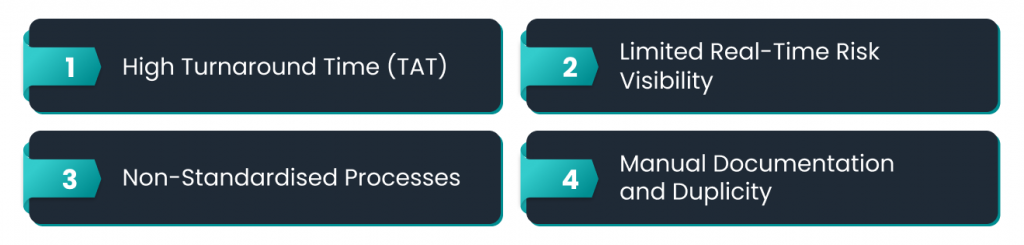
Here are some pain points that retail leaders encounter when onboarding new sellers, franchisees, or service providers:
1. High Turnaround Time (TAT)
Manual verification processes often lead to delays in onboarding, slowing down business growth.
2. Limited Real-Time Risk Visibility
Without real-time checks, fraud, legal issues, or compliance gaps are discovered after onboarding—by then, the damage is often done.
3. Non-Standardised Processes
Decentralised teams using different tools and formats create inconsistencies and increase error rates.
4. Manual Documentation and Duplicity
Physical paperwork, Excel trackers, and lack of version control result in inefficiencies and security risks.
Why Third-Party Due Diligence Is a Game-Changer
Third-party due diligence goes beyond just document collection. It offers a holistic framework to evaluate and continuously monitor the entities you work with.
OnGrid’s due diligence platform offers:
Speed and scale: Automate risk checks across thousands of sellers or vendors without increasing overhead
Real-time risk alerts: Be instantly informed if a registered partner appears in a legal case or media controversy
Batch and API modes: Whether you’re onboarding one vendor or a thousand, OnGrid supports both operational models
Data security: ISO, SOC 2, and GDPR-compliant infrastructure to protect your sensitive data
OnGrid’s Due Diligence Framework
OnGrid’s due diligence is designed to address multiple dimensions of third-party risk:
1. Operational Risk
Understand how efficiently a seller or vendor functions—through GST filing behaviour, turnaround consistency, and market presence.
2. Financial Performance
Evaluate stability using:
Three-year financial statements
GST returns and trends
Ratio analysis
Bank account verifications
3. Management Risk
Review the track record of key stakeholders—directors, owners, or promoters—using historical data, directorship mapping, and blacklists.
4. Reputation and Integrity
Scan court records, crime databases, and media coverage to uncover red flags that may affect your brand by association.
5. Compliance Health
Verify registration under PF, ESIC, GST, Udyam, and other regulatory bodies.
6. Physical Site Assessment
For critical vendors and sellers, OnGrid offers proof of physical existence through photographs and on-site validations.
Key Verification Components for Retail and E-Commerce
When onboarding a third party, here are some of the essential verification checkpoints:
Corporate identity: PAN, GSTIN, CIN, Udyam, Address
Director/promoter validation: PAN, DIN, past directorship history
Court and criminal records: India-wide database search
Financial checks: Ratio analysis, creditworthiness, GST filing
How Retail Platforms Benefit from OnGrid’s Due Diligence APIs
Here’s how OnGrid’s solutions drive real results for the retail and e-commerce sector:
Faster Seller Onboarding
Automated checks reduce TAT and allow rapid go-lives – critical in festive seasons or product launches.
Reduced Fraud Exposure
Eliminate high-risk sellers before they impact customers or the brand.
Regulatory Compliance
Stay audit-ready with documented trails and automated proof of compliance.
Real-Time Alerts
Get notified if an onboarded entity is involved in a lawsuit or faces sanctions, allowing proactive intervention.
Scalable Across Geographies
Cover over 18,000+ pincodes with digital and physical reach—ideal for Tier 2 and Tier 3 market expansions.
Real-World Use Cases
E-Commerce Platforms
Verify GSTINs, check seller identity, and run instant legal checks before allowing listings.
Logistics Aggregators
Perform background verification of delivery partners, warehouse vendors, and fleet operators.
Retail Franchisors
Assess franchisee financial health, prior compliance, and legal record before awarding franchise rights.
With OnGrid’s due diligence solutions, you can turn risk management into a growth enabler – protecting your platform, customers, and reputation in one seamless move.
Want to know how OnGrid can support your onboarding goals?
Write to us at partner@ongrid.in
Frequently Asked Questions (FAQs)
Q1: What is third-party due diligence in retail?
Third-party due diligence refers to the process of verifying the background, compliance status, financial health, and reputational standing of sellers, vendors, franchisees, or service providers before and after onboarding.
Q2: Why is due diligence important for e-commerce platforms?
E-commerce platforms rely on thousands of third parties. Due diligence ensures these entities are trustworthy, legally compliant, and financially stable, helping protect customer trust and platform integrity.
Q3: Can due diligence help prevent fraud?
Yes. By running checks on court records, media coverage, and financial stability, businesses can flag and block high-risk entities before they cause harm.
Q4: How long does the due diligence process take with OnGrid?
Instant API checks can validate identity, GST, bank details, and criminal records in minutes. More detailed financial and reputational checks can be completed within 24 to 48 hours.
Q5: Is the process scalable for large platforms?
Absolutely. OnGrid supports both batch processing and seamless API integrations, making it ideal for high-volume platforms onboarding hundreds or thousands of sellers or vendors each month.
Q6: Can OnGrid monitor vendors post-onboarding?
Yes. OnGrid enables ongoing risk monitoring through real-time alerts for legal cases, compliance changes, and reputational risks.






Leave a Reply