





-

Patient Verification for Due Diligence in Healthcare
A private hospital in Mumbai admitted a patient for a cardiac procedure. The identity documents checked out — Aadhaar copy submitted, insurance card presented, admission form signed. The procedure was performed. The insurance claim was filed. Only later, during an audit, did the hospital discover that the patient’s identity had been borrowed. The real cardholder…
-
CPV in India: Key Insights, Use Cases & Process
If you’ve ever hired a vendor, onboarded a new employee, or extended credit to a business partner in India, you’ve probably asked yourself at some point: “Is this person or company actually reachable at the address and number they gave me?” That one question is exactly what Contact Point Verification — CPV — is designed…
-
Bulk Hiring Guide: How Enterprises Hire at Scale
There’s a moment every HR leader dreads — the call from the C-suite saying the company is expanding operations, launching a new vertical, or opening three new facilities by Q3. “We need 400 people in 90 days.” If you’ve been there, you know that feeling. It’s part excitement, part controlled panic. Bulk hiring — or…
-
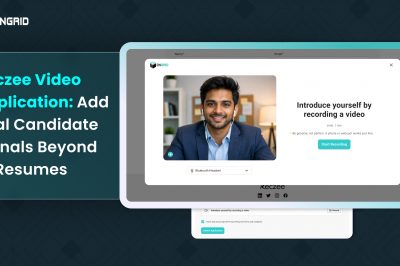
Reczee Video Application: Add Real Candidate Signals Beyond AI Resumes
Resumes Look Perfect. Candidates? Not Always. There was a time when a well-written resume meant something. Today, it still does—but not in the same way. With AI tools everywhere, resumes have become cleaner, sharper, and more keyword-optimized than ever. But that polish often hides more than it reveals. Everyone looks equally good on paper. And…
-

TPRM Framework: Build Strong Third-Party Risk Systems
Every business today depends on third parties more than it would like to admit. Vendors process payments, partners handle onboarding, agencies manage data, and external teams plug directly into core systems. On paper, this makes operations faster and more scalable. In reality, it also expands your risk surface in ways that are often invisible. Most…
-
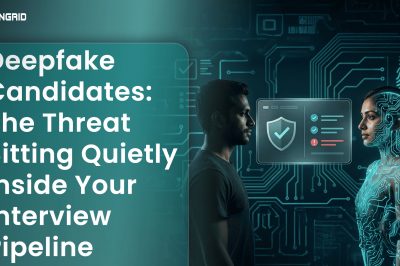
Deepfake Candidates: The Threat Sitting Quietly Inside Your Interview Pipeline
There’s a moment every recruiter knows well. The candidate joins the video call, camera on, background neat. They answer questions fluently. Their resume checks out. The conversation flows. You think: this one’s good. What if that person wasn’t real? This isn’t a hypothetical pulled from a sci-fi script. In March 2026, Bengaluru-based interview platform InCruiter flagged a…
-
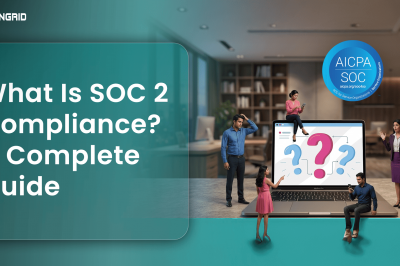
What Is SOC 2 Compliance? A Complete Guide
If you’ve ever been part of a sales call with an enterprise client, you’ve likely heard this question come up at some point: “Are you SOC 2 compliant?” It usually appears somewhere between product demos and pricing discussions. And while it sounds like a technical checkbox, it rarely is. SOC 2 sits at the intersection…
-

Corporate Frauds in India: Real Cases & Key Gaps
Most people associate corporate fraud with headlines—large numbers, high-profile names, and sudden collapses. But that’s only the visible layer. In reality, fraud in India doesn’t usually begin with thousands of crores. It starts quietly—inside systems, processes, and assumptions that no one questions early enough. A document that seems fine. A vendor that looks legitimate. A…
-
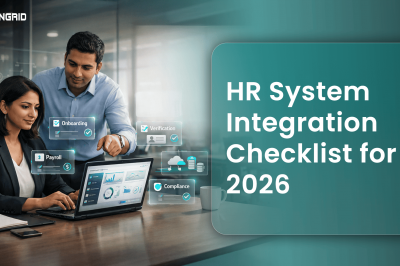
HR System Integration Checklist for 2026
HR teams today don’t lack tools—they’re drowning in them. Recruitment lives in one system, payroll in another, attendance somewhere else, and background verification often sits outside the core stack. What should be a smooth employee journey ends up becoming a patchwork of manual updates, follow-ups, and “just checking if this is done.” That’s exactly where…
-
Vendor Audit Checklist: Complete Guide to Evaluate Vendor Risk
If you’ve worked with vendors long enough, you know this truth: problems rarely show up on Day 1. They build quietly—missed SLAs, inconsistent quality, unclear compliance—and by the time they surface, the vendor is already deeply embedded in your operations. That’s exactly why a vendor audit checklist isn’t just a procurement document. It’s a control…